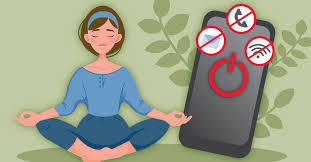
We’ve all been there. January 1st arrives, and we’re filled with determination. This year, we tell ourselves, will be different. We’ll exercise every day, eat perfectly, meditate, and finally become the healthier version of ourselves we’ve always wanted to be. We buy the gym membership, stock the fridge with kale, and download the meditation app. For a week, maybe two, we’re on fire. Then, slowly, the cracks appear. We miss one workout, then another. The kale wilts in the fridge. The meditation app goes unused. By February, we’re back to where we started, feeling guilty and defeated. The problem isn’t a lack of willpower. The problem is that we don’t understand how habits actually work. Building lasting lifestyle change is not about motivation; it’s about science.
Building Habits That Stick, The Science of Lasting Lifestyle Change


The Habit Loop: Cue, Craving, Response, Reward
To change a habit, you first have to understand its anatomy. Charles Duhigg, in his book “The Power of Habit,” popularized the concept of the habit loop, which consists of four components. First is the cue, the trigger that initiates the behavior. This could be a time of day, a location, an emotional state, or the presence of other people. Second is the craving, the motivational force behind the habit. You don’t crave the habit itself; you crave the change in state it delivers. Third is the response, the actual habit you perform, whether it’s reaching for a cigarette, going for a run, or opening the refrigerator. Finally, there’s the reward, the benefit you receive, which satisfies your craving and teaches your brain that this loop is worth remembering.
Understanding this loop is powerful because it reveals that habits are not moral failings; they are neurological patterns. Your brain is constantly looking for ways to save effort. It wants to turn repeated behaviors into automatic routines so it can focus on other things. This is why habits are so hard to break—they’ve been handed over to the automatic part of your brain. But it’s also why they can be built. You can deliberately design new loops and, over time, make them automatic.
Start Tiny: The Power of Atomic Habits
One of the biggest mistakes people make when trying to build new habits is starting too big. They decide they’re going to run five miles every day, when they haven’t exercised in years. This is like trying to lift a weight that’s ten times heavier than you can handle. You’ll fail immediately, and that failure will reinforce a sense of defeat.
James Clear, in his bestselling book “Atomic Habits,” popularized a different approach: start incredibly small. Want to start running? Your new habit is simply putting on your running shoes. Want to start meditating? Your new habit is sitting on your meditation cushion for one minute. Want to start flossing? Your new habit is flossing one tooth.
These tiny actions seem almost laughably small, and that’s the point. They require almost no motivation or willpower. There’s no excuse not to do them. And here’s the magic: once you put on your running shoes, you’ll probably go for a short walk, and maybe even a jog. Once you sit on your cushion for one minute, you’ll likely stay for five. The tiny habit acts as a gateway, lowering the activation energy so much that starting becomes inevitable. Over time, these small, consistent actions compound into remarkable transformations.
Environment Design Over Willpower
We like to believe that we are in control of our choices, but research shows that our environment has a massive, often unconscious, influence on our behavior. Willpower is a limited resource that gets depleted throughout the day. By the evening, your ability to resist temptation is at its lowest. Relying on willpower to make healthy choices is a losing strategy.
A far more effective approach is to design your environment for success. Make the habits you want to adopt as easy as possible, and the habits you want to break as hard as possible. Want to eat more fruit? Place a beautiful bowl of fresh fruit on your kitchen counter, right where you’ll see it. Want to stop mindlessly snacking on chips? Hide them in the back of the highest cupboard, or better yet, don’t buy them at all. Want to exercise in the morning? Lay out your workout clothes next to your bed the night before. Want to read more instead of scrolling on your phone? Put your phone in another room while you sleep and keep a book on your nightstand.
These small environmental tweaks remove the need for constant decision-making. Your environment becomes your ally, gently guiding you toward the behaviors you want, rather than constantly testing your willpower.
Identity-Based Habits
There’s a deeper level to lasting change, and it has to do with how you see yourself. Most people approach habit change with an outcome-based mindset. They say, “I want to lose weight,” or “I want to run a marathon.” These goals are fine, but they don’t address the root of the behavior.
Identity-based habits flip this around. Instead of focusing on what you want to achieve, focus on who you want to become. Every action you take is a vote for the type of person you wish to be. If you run for 20 minutes, you are casting a vote for being a runner. If you make a healthy meal, you are casting a vote for being a healthy eater. If you meditate for five minutes, you are casting a vote for being a mindful person.
Over time, these small votes accumulate. Your beliefs about yourself begin to shift. You stop seeing yourself as someone who is “trying to lose weight” and start seeing yourself as “the kind of person who lives a healthy lifestyle.” This identity shift is powerful because it aligns your actions with your self-image. Once you believe you are a healthy person, making healthy choices feels natural and automatic, not like a constant battle against your own desires.
The Two-Minute Rule and Habit Stacking
Two final techniques can help cement your new habits. The Two-Minute Rule states that when you start a new habit, it should take less than two minutes to do. “Read before bed” becomes “read one page.” “Do yoga” becomes “unroll my yoga mat.” “Study for class” becomes “open my notes.” As we’ve discussed, the goal is to make starting so easy that you can’t say no. Once you’ve started, the momentum often carries you forward.
Habit stacking, a term coined by James Clear, involves linking your new habit to an existing one. The formula is: “After [current habit], I will [new habit].” For example: “After I pour my morning coffee, I will meditate for one minute.” “After I put on my pajamas, I will do one push-up.” “After I sit down to dinner, I will say one thing I’m grateful for.” By anchoring your new behavior to an established routine, you leverage the power of an existing neural pathway, making it much more likely that the new habit will stick.
Building lasting healthy habits is not about perfection. You will miss days. Life will get in the way. The key is to never miss twice. A missed workout is an accident; two missed workouts is the beginning of a new, unwanted habit. Get back on track immediately. Be kind to yourself in the process. Sustainable change is not built in a day or a week; it is built through the accumulation of tiny, consistent actions, repeated over months and years. You have the power to rewire your brain and redesign your life, one small habit at a time.